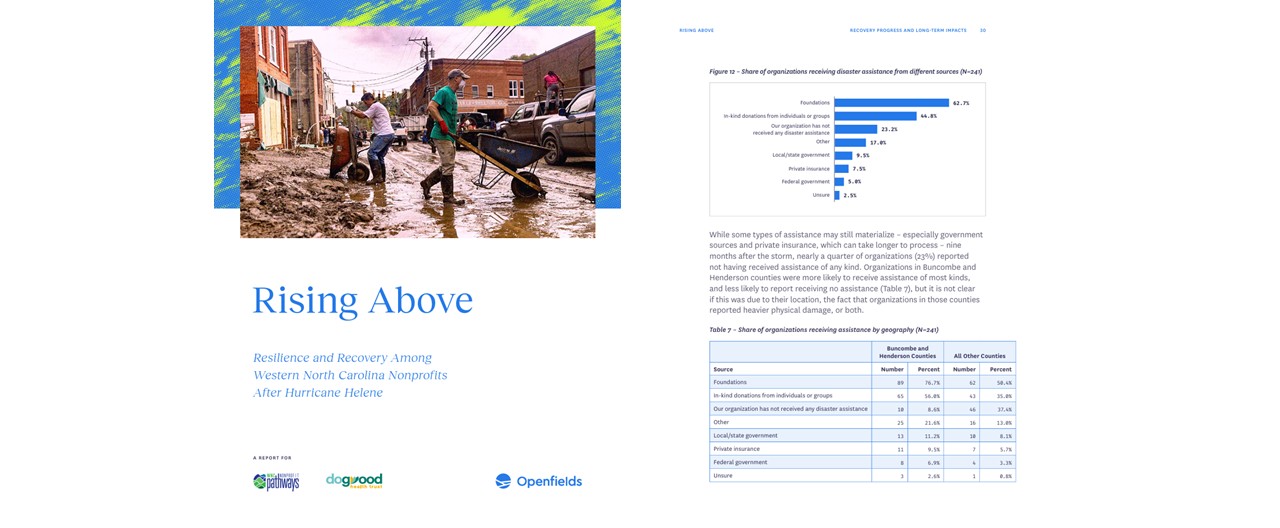
Rising Above: Resilience and Recovery Among Western North Carolina Nonprofits After Hurricane Helene
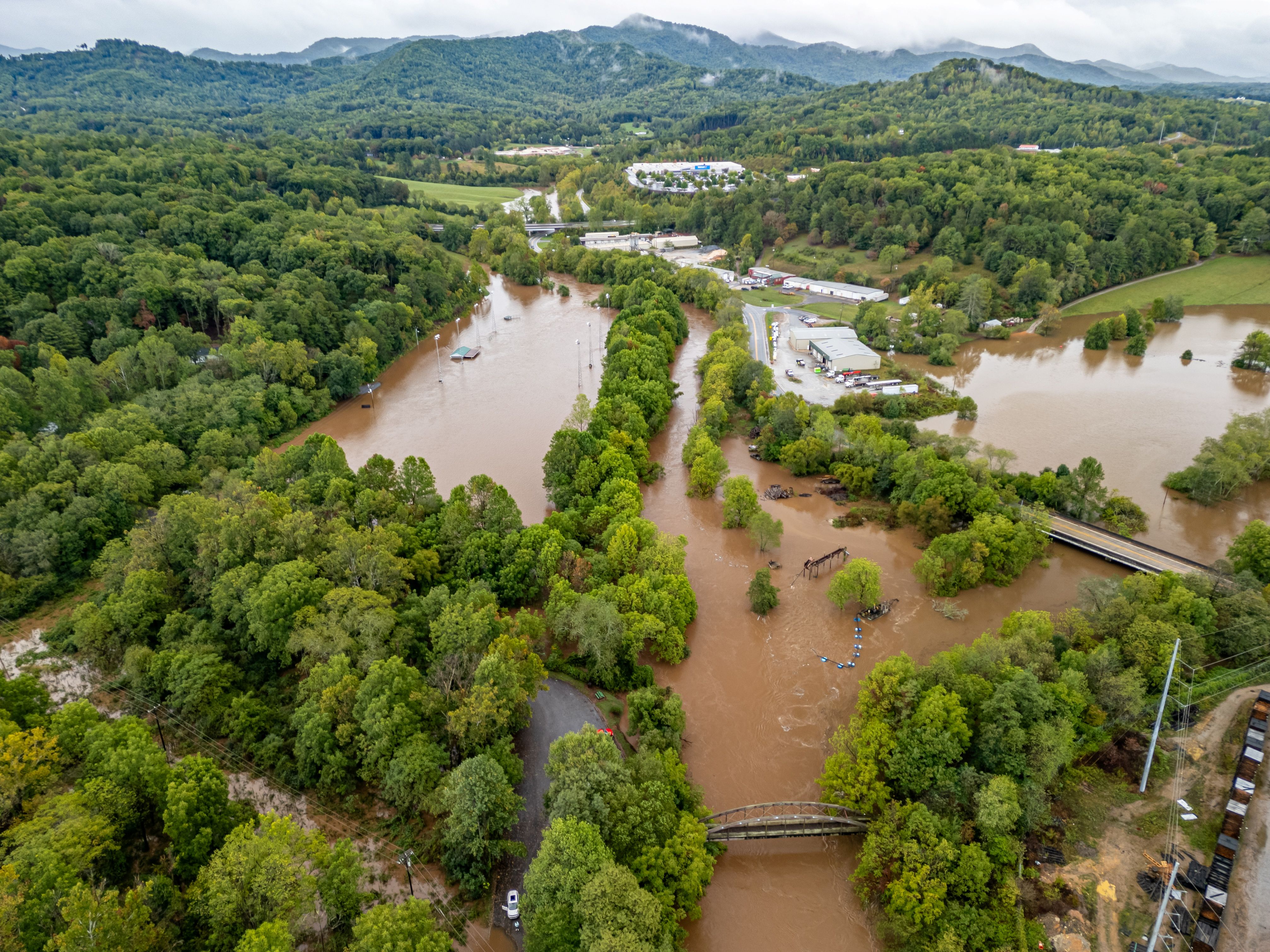
Rising Above is a region-wide study of how Hurricane Helene and the federal policy shifts of 2025 affected nonprofits in Western North Carolina. WNC Nonprofit Pathways, a regional capacity-building organization, commissioned it with support from Dogwood Health Trust. By state estimates, Helene was the costliest natural disaster in North Carolina’s history, and nonprofits were caught in the middle: hit by the storm and relied on to lead the response.
What did we do?
To produce the report, Openfields designed a 58-question survey in English and Spanish and tested it in interviews with nonprofit leaders. Pathways sent it to 540 leaders, then to more than 2,000 nonprofit professionals. To reach groups that didn’t exist before the storm, we asked respondents to name new organizations and invited those to respond as well. Between May and July 2025, 251 organizations responded, from the Qualla Boundary and all 18 counties in the region. Fielding the survey nine months after the storm let us look past the emergency to what recovery requires, including identifying slower effects like burnout.
What did we find?
Nonprofits were survivors and first responders at once. Nearly six in ten reported physical damage, more than $100 million in all, and more than half pivoted to frontline relief.
“Our community clinics were converted to ‘field hospital’ type clinics, with volunteer providers and no charges/no billing insurance.”
— Executive Director, Mitchell County
Staff capacity, more than property, became the constraint. Burnout and other internal capacity problems were the most common barrier to recovery, cited by half of respondents. Only 31% said they have the paid staff they need.
“We missed out on several disaster recovery grants early on as we simply did not have the capacity to identify them or apply for them.”
— Executive Director, Buncombe County
Foundations carried much of the recovery, reaching 63% of organizations; federal aid reached 5%. Meanwhile, 54% had changed their finances, programs or staffing because of federal policy shifts. Leaders remain resolute, with 82% confident they can lead through current conditions, but many asked for peer support, crisis-leadership training and mental health care.
“At present, I am the only paid staff, and am trying to write grants, manage the finances, develop programs. It’s overwhelming at times. But I suspect I am not alone.”— Executive Director, Cherokee County
Key takeaways
Our report concluded with a series of key insights for Pathways and Dogwood as they look to future preparedness, and for other organizations and funders that are considering how to prepare for, and respond to, natural disasters in their own communities:
- Nonprofits are part of the disaster, not only the response. Recovery plans should count their staff among the affected.
- Fund capacity, not just programs. Operating funds were the top remaining need, and some organizations missed grants because no one was free to apply.
- Philanthropy is holding the line. With federal support thin and shifting, the region’s foundations carry unusual weight.
- Care for the leaders. Peer networks, crisis training and mental health support sustain the people holding recovery together.
Thanks to WNC Nonprofit Pathways, Dogwood Health Trust, and the 251 nonprofit leaders who shared their time and experiences.
Read Dogwood Heath Trust CEO Susan Mim's blog post at the Center for Effective Philanthropy (CEP): What Can Philanthropy Learn from Nonprofits’ Leadership on Hurricane Helene Recovery?
Openfields Team
Amy Jonason, Tim Green, Molly Kaminski, Parker Kinard and Ben Abdo; design by Magda Castría.
About WNC Nonprofit Pathways
Western North Carolina Nonprofit Pathways is a collaboration of the following funding organizations: Cherokee Preservation Foundation, The Community Foundation of Western North Carolina, Dogwood Health Trust, United Way of Asheville and Buncombe County, and the WNC Bridge Foundation. WNC Nonprofit Pathways was formed in 2006 out of concern about the increasing demands on nonprofits. The funders recognized that nonprofits must operate from a place of organizational strength in order to carry out their missions effectively. Each year, these same funders contribute dollars to provide Pathways’ services, making high quality, capacity building support available at low or no cost to nonprofits across the mountain region.
About Dogwood Health Trust
Dogwood Health Trust exists to dramatically improve the health and well-being of all people and communities in the 18 counties and Qualla Boundary of Western North Carolina. Working with our community, grantees, partners, researchers and scholars, we collaborate to create a Western North Carolina where every generation can live, learn, earn and thrive, with dignity and opportunity for all – no exceptions.


Our work with Openfields has helped us see the limits in our own thinking and begin to generate ideas and alternatives to challenge and transform the status quo.
Dr. Jackie Counts
Director of the Center for Public Partnerships & Research at the University of Kansas

Find us in Greenville, Asheville, and DC.
