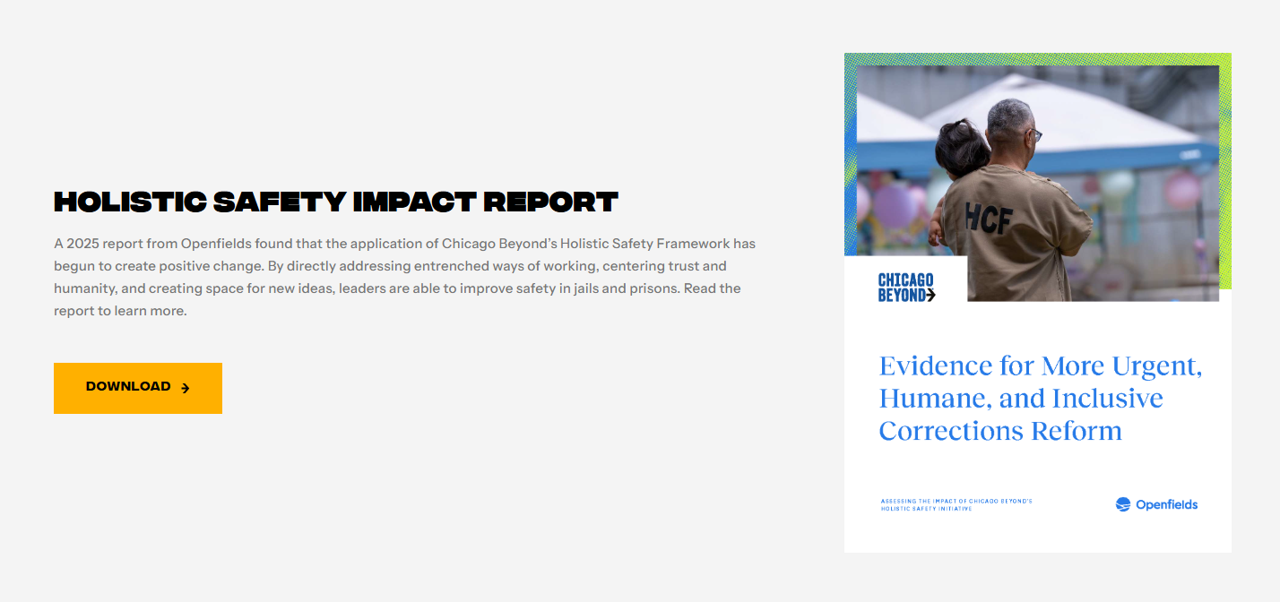
Evidence for More Urgent, Humane, and Inclusive Corrections Reform
Conducting an early-stage evaluation to reduce harm
Holistic Safety is Chicago Beyond’s framework for makingjails and prisons safer. It rests on three insights: violence and trauma harmboth people incarcerated and correctional staff; a culture of dehumanizationand isolation keeps that cycle going; and much of the expertise needed toimprove conditions sits with correctional officers and people incarcerated.Rather than prescribing policies, Holistic Safety gives administrators aprocess for bringing those groups together to identify problems and designsolutions.
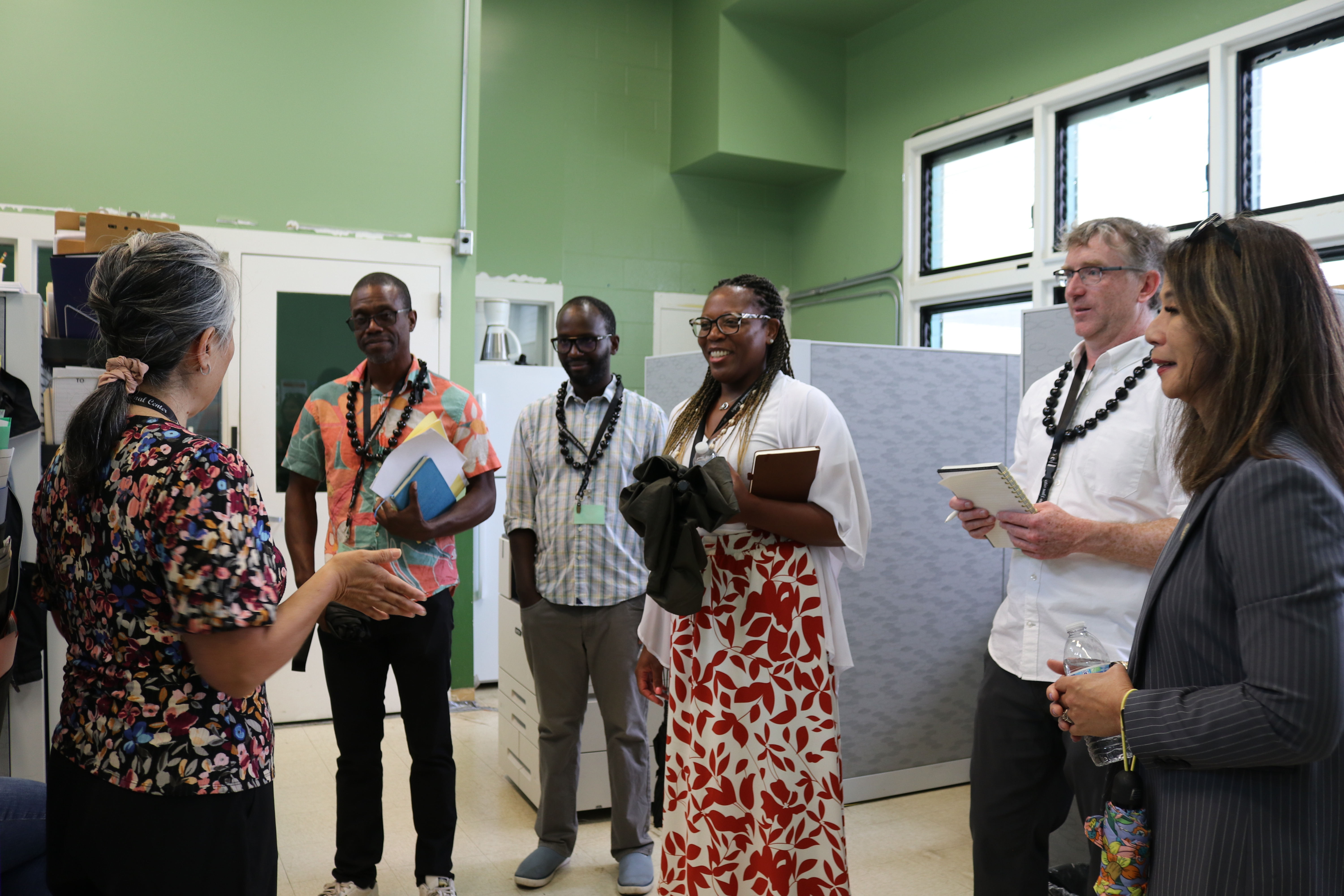
Chicago Beyond asked Openfields to conduct an early-stageassessment of the Holistic Safety Initiative - a program that involvestraining, coaching, and facilitation support for two cohorts of correctionalsystems. Our job was to assess the initiative as it was developing, documenthow it was working, identify where it wasn’t, and collect early evidence ofimpact. We focused on eight partnerships with jails and prison systems holdingmore than 91,000 people. We interviewed several dozen people including correctionsadministrators in those systems and leaders in the broader justice reformmovement, attended Chicago Beyond’s first National Justice Convening, andreviewed hundreds of documents.
What we observed
Trust came first. Administrators said Chicago Beyond treated them as people with expertise rather than obstacles. That made them willing to try uncomfortable things, like listening to people incarcerated and frontline staff share criticism and ideas for reform. As one administrator in the program put it:
“The most important part of [...] the focus groups [was] forcing us [into] some uncomfortable positions, to allow [people incarcerated to] speak their mind and basically critique us and sit there and listen to it.”
Change followed. All five systems in the 2024 cohort were bringing people incarcerated and frontline staff into reform decisions; four were making visitation more humane, and four were expanding support for staff wellness. In an example of change from one facility, people incarcerated asked to stop wearing prison uniforms during recreation because of heat and hygiene. Staff opposed it at first, but the facility made the change because leadership listened.
Key takeaways from the report for Chicago Beyond, corrections leaders, and the wider field of funders
- The expertise is inside the walls. Reform works best when frontline staff and people incarcerated help lead it.
- Safety is improved not simply through control, but by recognizing each other’s humanity. Creating spaces of dialogue and listening can shift the culture.
- Listening is a commitment. State leaders need to fund and sustain what listening sessions surface, or the process backfires.
- Patient funding matters. Chicago Beyond’s independent funding let it put trust before deliverables. Funders seeking similar results should take similar risks.
We believe this project and Chicago Beyond's approach of rigorous, open-minded learning with participants in the early stages of designing and deploying a program serve as an example to other funders, intermediaries, and non-profit partners leading reform interventions.
Download the full evaluation: Evidence for More Urgent, Humane, and Inclusive Corrections Reform
About Chicago Beyond
Chicago Beyond is a national philanthropic organization that addresses systemic inequity by backing solutions led by those closest to the issues. We make strategic investments, lead national initiatives, and provide valuable insights to drive equitable change in philanthropy, justice, health, and beyond. Since our inception in 2016, Chicago Beyond has invested more than $100 million in over 200 individuals and organizations in support of their mission.
Openfields team: Tim Green, Grady Powell, Parker Kinard, Jose Rodriguez, Amy Jonason and Ben Abdo; design by Magda Castría.


Our work with Openfields has helped us see the limits in our own thinking and begin to generate ideas and alternatives to challenge and transform the status quo.
Dr. Jackie Counts
Director of the Center for Public Partnerships & Research at the University of Kansas

Find us in Greenville, Asheville, and DC.
